Digitised and automated procurement planning achieves a more strategic, efficient, and responsive procurement function, which is crucial in today's dynamic business environment.
SupplyFlow can automate and digitise the Procurement Planning process.
-
Improved Efficiency and Time Management
By digitizing and automating procurement planning processes, SupplyFlow reduces the time and effort required to create, approve, and manage procurement plans. This leads to faster decision-making and streamlined procurement activities.
-
Enhanced Visibility and Control
The modules provide comprehensive visibility into the procurement planning process, allowing stakeholders to track progress, monitor compliance, and manage resources effectively. This increased transparency helps in identifying bottlenecks and improving overall control of the procurement lifecycle.
-
Standardized Processes
SupplyFlow ensures that procurement planning follows standardized procedures, reducing the risk of errors and inconsistencies. This standardization helps in maintaining quality and compliance with organizational policies and regulatory requirements.
-
Better Collaboration and Communication
The system facilitates collaboration among different stakeholders involved in the procurement process, improving communication and reducing misunderstandings or information silos.
-
Data-Driven Decision Making
With integrated reporting and analytics features, SupplyFlow enables organizations to make informed decisions based on accurate and up-to-date data. This helps in optimizing procurement strategies and achieving better outcomes.
-
Flexibility and Scalability
The procurement planning modules are designed to adapt to varying organizational needs and scales, making it suitable for different types and sizes of projects. This flexibility ensures that the system can grow and evolve with the organization.
-
Risk Management
By providing a structured approach to procurement planning, SupplyFlow helps in identifying potential risks early in the procurement process, allowing for proactive risk management and mitigation strategies.
-
Cost Savings
Efficient procurement planning can lead to significant cost savings by ensuring that procurement activities are well-planned, competitively sourced, and aligned with organizational goals, leading to better negotiation and reduced procurement costs.
Key Features
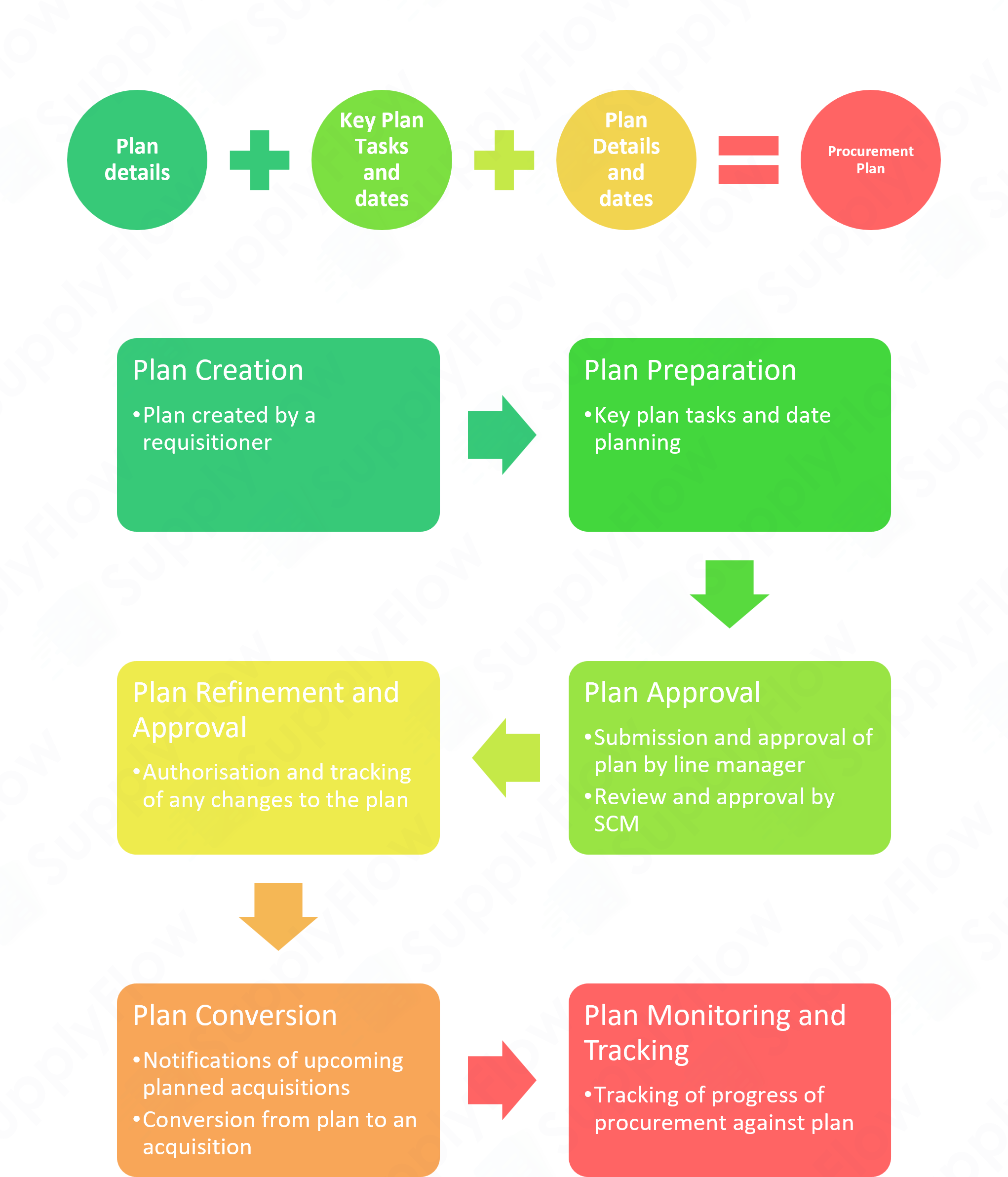
SupplyFlow streamlines procurement planning through its digital platform, enabling a structured and systematic approach to managing procurement activities. Here’s how each component is handled within SupplyFlow:
Plan Creation: In SupplyFlow, the process starts with a requisitioner creating a procurement plan. This involves defining the scope of procurement, including what needs to be bought, and aligning it with the project's objectives and constraints.
Plan Preparation: After the plan is created, it undergoes preparation where key tasks and dates are outlined. This stage ensures that all necessary steps for the procurement process are clearly defined, scheduled, and understood, facilitating a smooth progression of procurement activities.
Plan Approval: The procurement plan is then submitted for approval to the requisitioner's line manager and subsequently reviewed and approved by the Supply Chain Management (SCM) team. This step ensures that the plan meets the organizational procurement policies and project objectives.
Plan Refinement and Approval: SupplyFlow allows for any necessary refinements or adjustments to the plan to be made and tracked. This includes authorizing and documenting changes to the plan, ensuring that it remains aligned with project goals and market conditions.
Plan Conversion: The system notifies relevant parties of upcoming planned acquisitions, allowing for the timely conversion of procurement plans into actual acquisition activities. This feature ensures that procurement initiatives are launched according to schedule and aligned with the overall procurement strategy.
Plan Monitoring and Tracking: Throughout the procurement lifecycle, SupplyFlow provides tools for monitoring and tracking the progress of procurement activities against the plan. This feature helps to identify discrepancies, manage timelines, and ensure that procurement objectives are being met efficiently.